
Safe Sleep North Carolina
Fighting preventable infant sleep-related deaths through clear patient education.
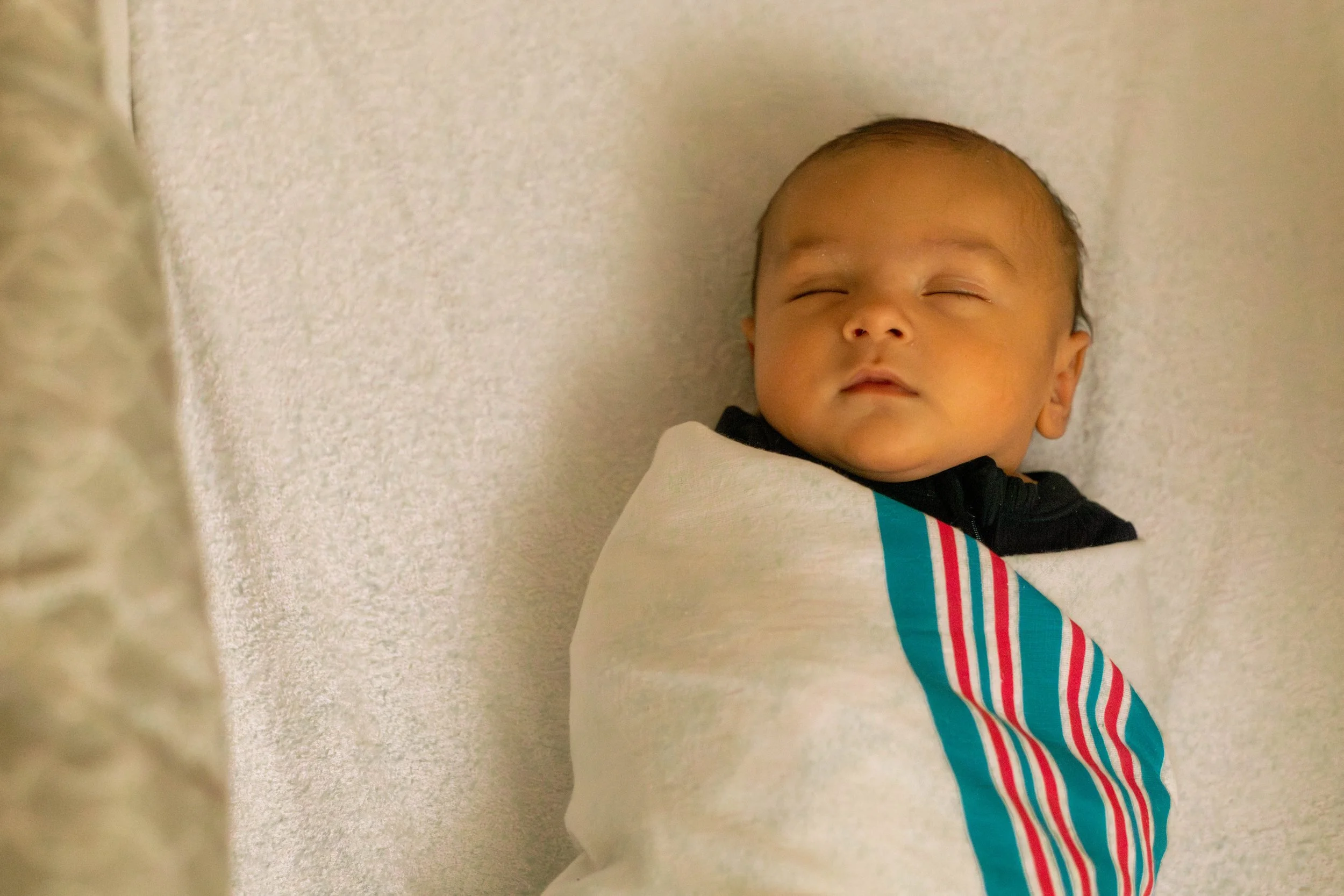
Safe Sleep NC needed patient education videos that could cut through misinformation and deliver life-saving safe sleep guidance to new parents and caregivers. We partnered to create a video series that translates complex medical recommendations into accessible, compassionate education designed for real caregiving moments.
Over 100 infants die each year in North Carolina from sleep-related causes. Many of these deaths are preventable. By creating resources families can trust and understand, this work supports safer sleep practices across the state and helps protect North Carolina's most vulnerable population.
This project builds on our experience designing patient-facing healthcare education, including education materials for maternal health initiatives and provider training videos for Duke OBGYN. It reflects how we approach health communication: clear, human-centered design that works in the real world.
Clear, caring education to help families practice safe sleep.
Video transcript
Hello. I'm a pediatrician and I'm also a mom. I know that there are so many choices to make about how to care for your baby, including how to keep them safe while they sleep. Sleep is so critical for their development and they're going to sleep a lot, and so we wanna make sure to create a safe sleep space every time.
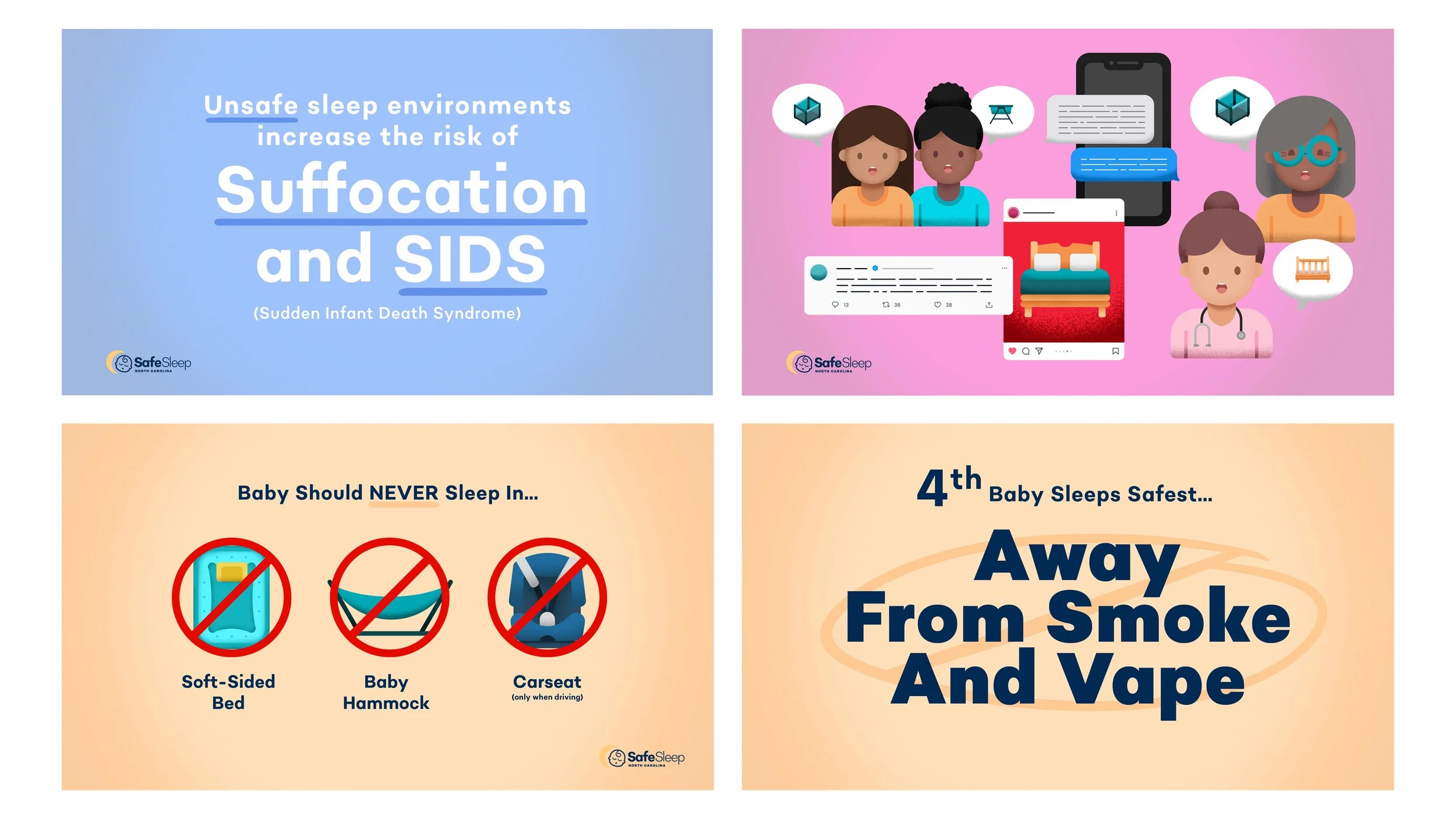
Sadly, over a hundred babies die each year in North Carolina in unsafe sleep environments. Unsafe sleep environments increase the risk of suffocation and sudden infant death syndrome or sits. I know it can be hard to hear, but the good news is that we have decades of research on the best way to make sleep safer for your baby.
There's a lot of advice out there about babies in sleep, but it is always important to follow medically proven advice. I'd like to share with you four key recommendations. First, baby sleeps safest, always on their back place, baby, on his or her back, never on their tummy or side for every nap and at night for the first year.
This helps them breathe best and reduces the risk of suffocation when they get older and roll on their own from their back to their stomach or side. That is fine, but always first place them on their back. If your baby is swaddled, you should stop swaddling them once they show signs of rolling, usually around two to three months.
And yes, it is safest for babies to sleep on their backs even if they spit up or have issues with reflux. Babies are less likely to choke, suffocate, or stop breathing when they are placed on their backs. Second babies sleep safest in a crib, bassinet, or pack and play. With a flat firm mattress that doesn't indent when pressed and has a fitted sheet.
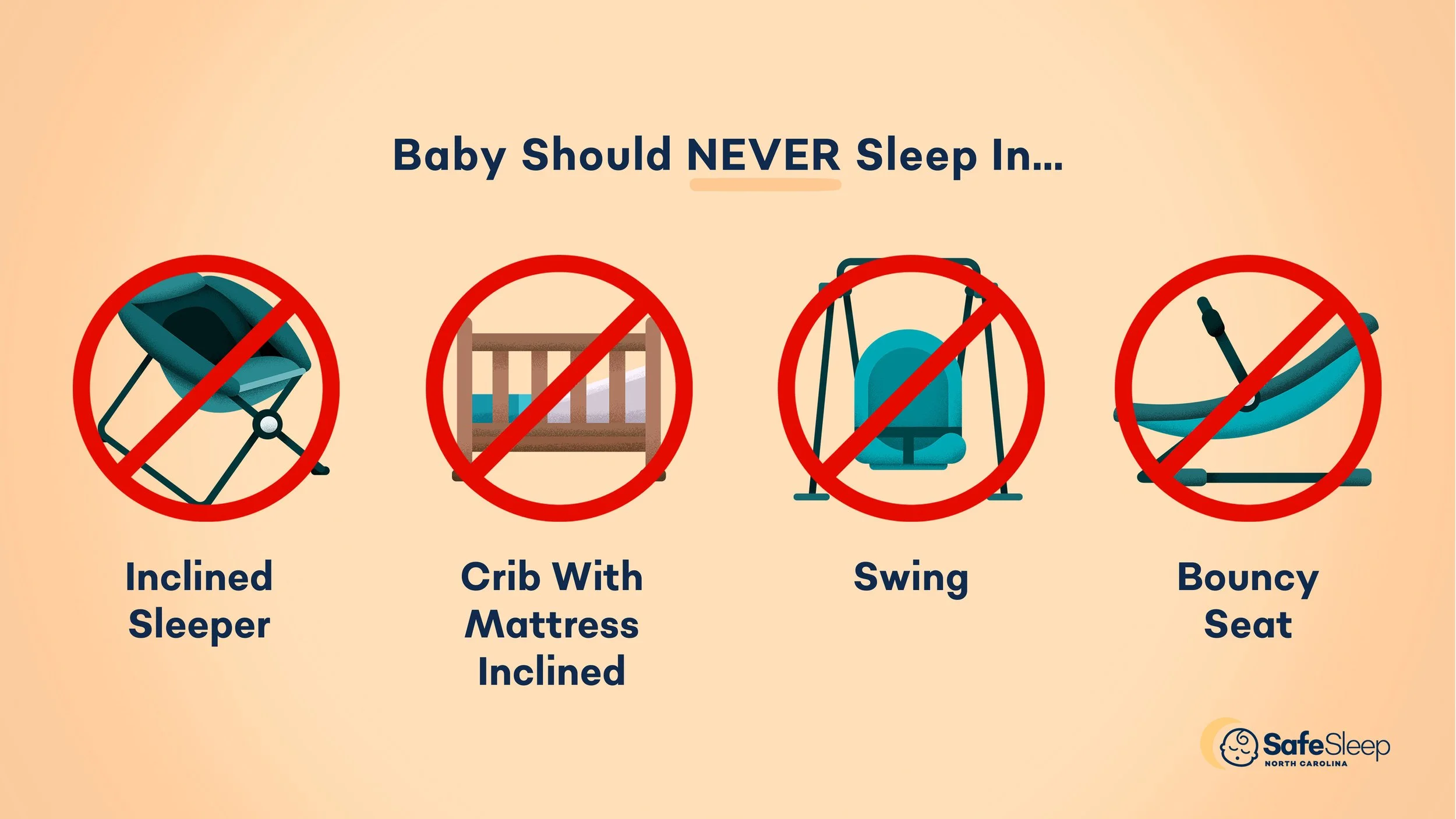
Babies should never sleep in an adult bed, couch or chair. They should also never sleep in an incline bed. Swing. Bouncy seat, soft sided bed or baby hammock and a car seat should only be used when driving. These sleep spaces should be avoided. Because they have been shown to increase the risk of suffocation and sids.
Third, baby sleeps safest when there's nothing but baby. This means only baby in their own space. It is not safe to sleep with your baby, whether on purpose or by accident. Instead of sleeping with baby, consider the recommendations to share your room, not your bed. This is based on research that shows it is safest to have your baby sleep in your room, but in their own approved safe sleep space.
Place next to your bed. This way you can more easily care for them as needed, especially at night, but allow them to sleep safely in their own space. You may feel that you're protecting your infant by having them sleep with you. But sadly, most sleep related deaths in North Carolina happen when a baby sleeps on the same surface with someone else, which could be their parent, caregiver, or sibling.
When your baby sleeps in their own space, you are keeping them safe from injury or death. Nothing but baby also means no extra items in their sleep space. No blankets, no pillows, no sleep, positioners, and no stuffed animals. These items increase the risk of suffocation. And lastly, your baby's safest when they are kept away from smoke and vape before and after they are born.
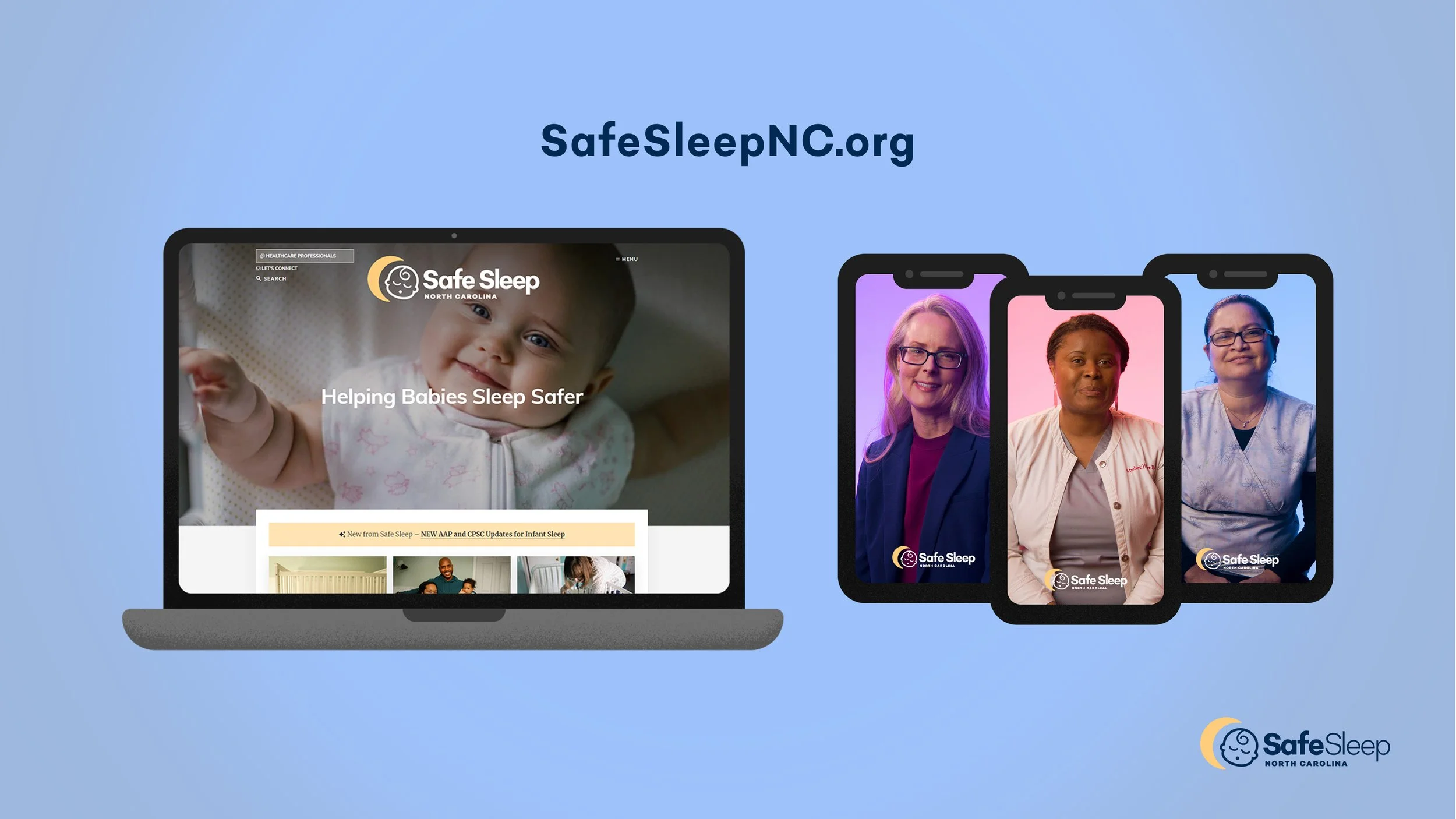
Tobacco exposure makes it harder for infants to breathe and greatly increases the risk of sleep related death. And sids. You may still have questions or need more support to follow these recommendations. I understand most parents do. Talk to your healthcare provider and visit safe sleep nc.org to find videos with expert answers to common questions and concerns about keeping your baby safe while they sleep.
Be sure everyone who cares for your baby follows these lifesaving practices. Remember, decades of medical research supports that your baby sleep safest with these recommendations. Always on their back in a crib or pack and play with nothing but baby and free from smoke and vape.
The challenge
Safe sleep guidance exists, but it doesn't always reach families in a way they can use. Parents and caregivers face:
Conflicting information from family, friends, social media, and online sources
Cultural practices that may not align with current safe sleep recommendations
Overwhelming advice that leaves families confused about what's actually safe
Accessibility barriers when educational materials use complex medical language or don't reflect diverse family experiences
Safe Sleep NC needed patient education videos that could:
Deliver evidence-based safe sleep guidance clearly and compassionately
Address common questions and concerns parents actually have
Work across multiple settings (clinical spaces, digital platforms, home viewing)
Build trust with diverse audiences while maintaining medical accuracy
Our Approach
We designed a video series grounded in clarity, compassion, and real-world usability. Our approach prioritized:
Plain language and tone
We avoided medical jargon and used conversational language that feels supportive rather than prescriptive. The goal was to inform and empower families, not overwhelm them.
Evidence-based messaging from trusted voices
Safe sleep recommendations come directly from decades of research. We featured healthcare providers who could communicate this guidance with both authority and warmth.
Flexibility for multiple viewing contexts
These videos needed to work in pediatric clinics, sent via text or email, viewed on phones at 2 a.m., or shared by community health workers. We designed for that versatility.
Human-centered visuals
We created visuals that feel real and relatable, not overly clinical or sterile. Families needed to see themselves in this content.
The result is a video series that delivers critical health information in a format families can trust, understand, and return to when they need it most.
Services Goodfight Provided
Strategy and messaging framework for patient education videos
Scriptwriting and content development
Creative direction and visual design
Video production and post-production
Modular video series designed for distribution across clinical and digital platforms
Built for Real Families, Real Moments
Safe sleep guidance doesn't just matter in the pediatrician's office. It matters at 3 a.m. when a sleep-deprived parent is second-guessing a choice. It matters when a grandparent is caring for the baby and hasn't heard updated guidance. It matters when families are navigating conflicting advice from people they trust.
We designed these videos to work in those moments:
Short, focused format that respects parents' time and attention
Accessible on any device for easy viewing and sharing
Reassuring tone that meets families where they are without judgment
Clear takeaways parents can remember and apply immediately
The videos address common questions like co-sleeping, swaddling, sleep surfaces, and what to do when babies roll over on their own. Each video gives families actionable guidance they can trust.
Why We Fought for This Work
For Safe Sleep NC, the stakes were clear: every year, preventable deaths happen because families don't have access to clear, trustworthy information about safe sleep.
This work mattered because good design can close that gap. When health information is communicated clearly and compassionately, families can make safer choices. When education feels human and accessible, people actually use it.
We fought for this project because it reflects what we believe about healthcare communication: that clarity can be caring, that evidence-based guidance can feel human, and that design has a role to play in protecting lives.
This is the kind of work we do with public health initiatives, healthcare systems, and mission-driven organizations navigating complex health topics. We show up to create tools that work in the real world and support the people who need them most.